
Why it comes up in Vienna
Vienna has long-established neighborhoods, many dating from the town's postwar growth, and homeowners who have been in the same house for years often want to keep it. The bathroom is usually the room that decides whether that is comfortable. A tub you have to climb into, a narrow door, a slippery floor and no solid place to grab are the issues we hear most often.
Aging-in-place work is not only for later in life. It also helps after a surgery or injury, for a parent who visits or moves in, and for anyone who simply wants a safer bathroom.
What our aging-in-place upgrades include
- Grab bar installation
- Curbless, low-threshold showers
- Layout changes for wheelchair or walker accessibility
- Non-slip flooring options
Grab bars need blocking behind them
A grab bar is only as strong as what it is fastened to. Towel bars and drywall anchors are not substitutes. During a remodel we add solid backing in the walls where bars are going, and where they might go later, so a bar can be added in the right place without opening the wall again.
The shower entry
Removing the step into the shower is the single biggest change. A curbless shower slopes the floor to the drain so you can walk or roll straight in. Whether that is practical depends on the floor framing; in an older home it may mean rebuilding part of the subfloor. Where it is not, a low threshold still makes a big difference. A fold-down or built-in seat and a handheld shower head on a slide bar round it out.
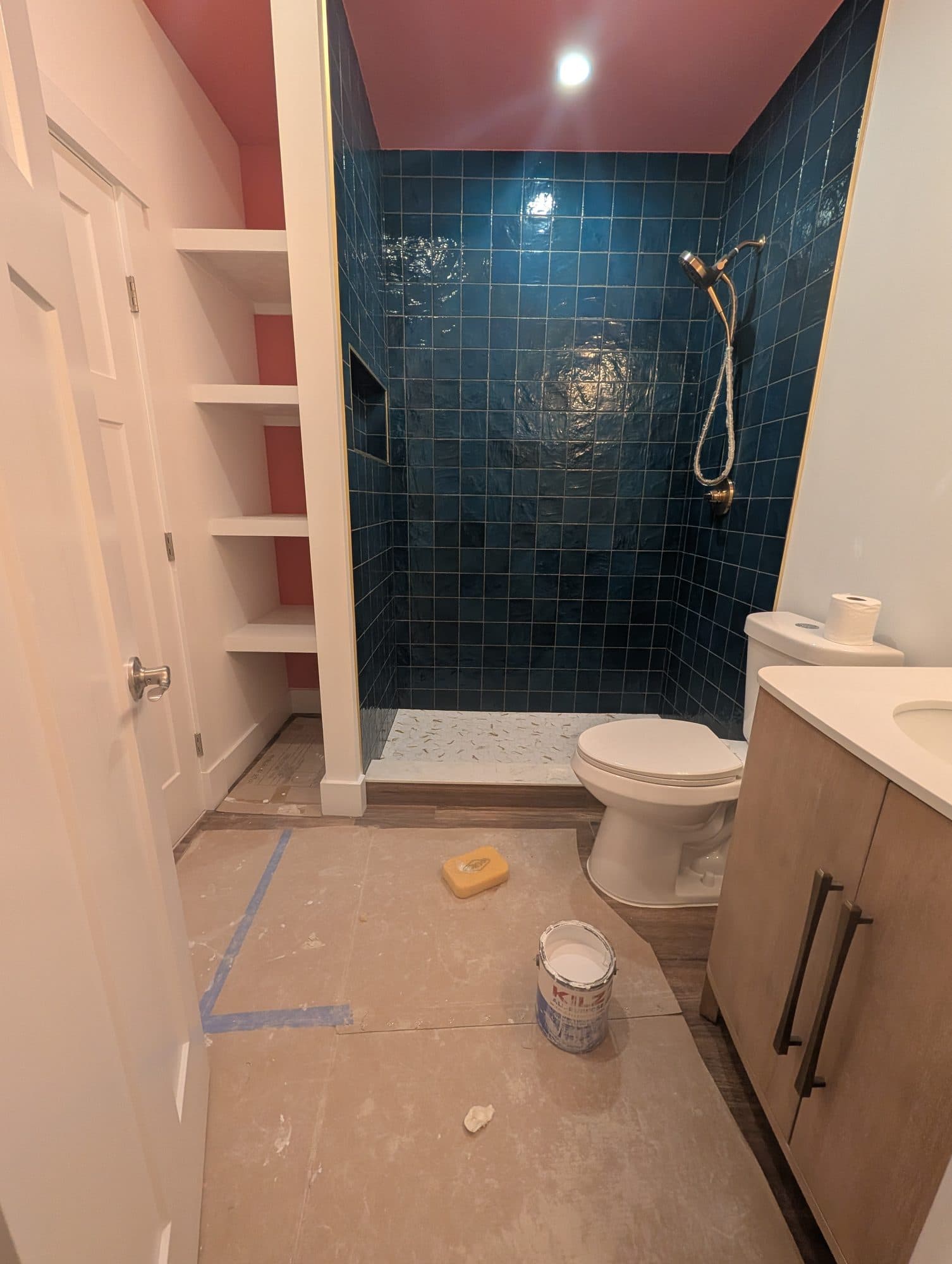
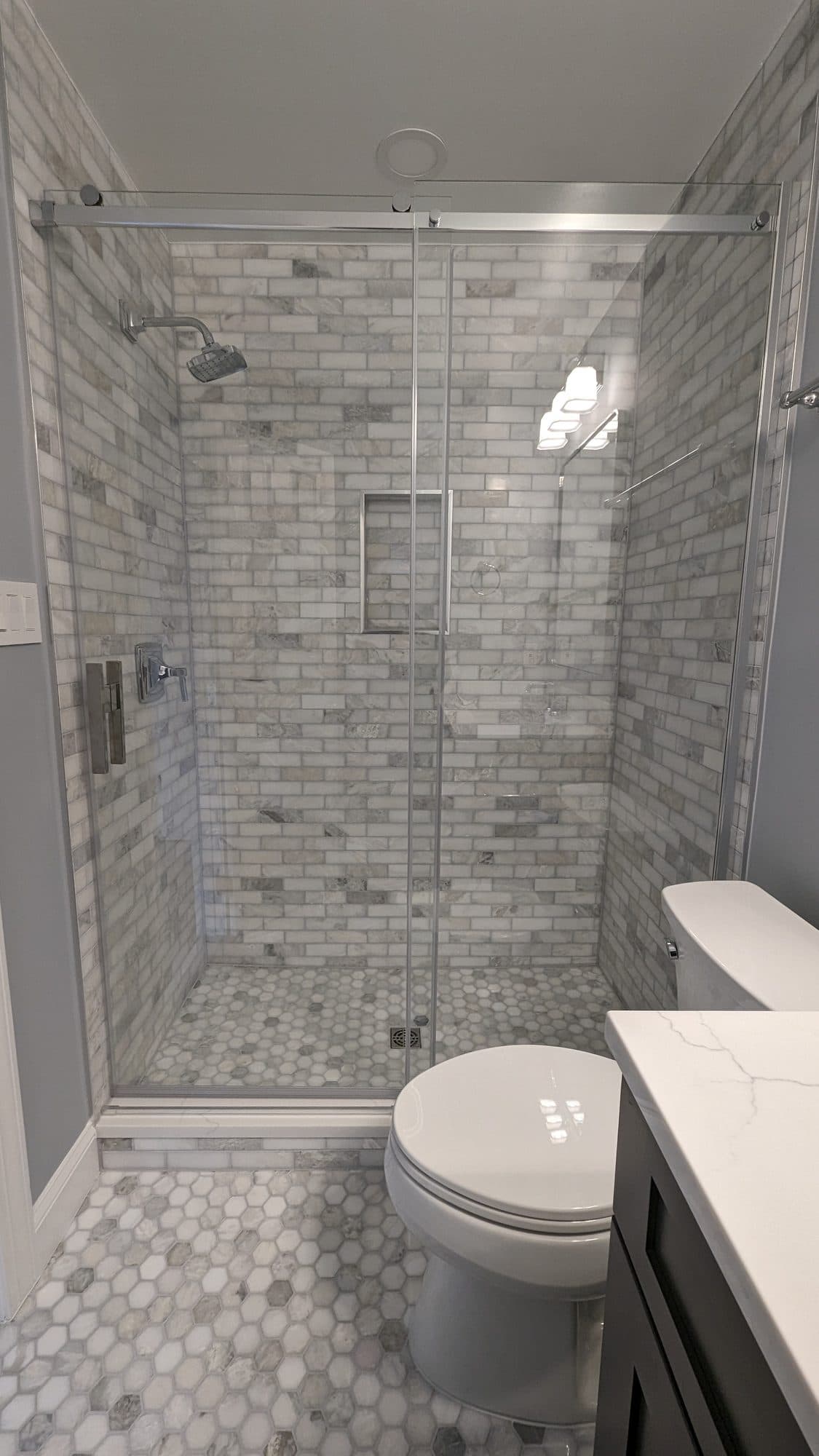
Neither photo is from Vienna: the blue tile walk-in shower is from Herndon and the frameless glass shower with a niche is from Reston. Both show how an open, step-free style of shower reads in a finished bathroom.
Room to move
Walkers and wheelchairs need clear floor space and wider openings. Sometimes that means moving the vanity, choosing a wall-hung or open vanity, swapping a swing door for a pocket door, or reorganizing the room entirely. Those changes affect framing and plumbing, so they are planned as part of the layout.
Small details that add up
Lever handles on faucets and a pressure-balanced shower valve are easier to use than knobs and protect against sudden temperature swings. A comfort-height toilet is easier to get on and off. Good, even lighting with switches at the door reduces the chance of a fall at night. None of these changes how the bathroom looks, and all of them are easiest to include when the room is being remodeled anyway.
Permits
Grab bars alone generally do not involve plumbing or wiring. A curbless shower conversion or a layout change usually does, and those need Fairfax County permits for the plumbing and any electrical work.
Typical cost
| Tier | Typical Scope | Range |
|---|---|---|
| Aging-in-Place Upgrades | Grab bars, curbless showers, and layout changes for long-term accessibility. | $3,000–$12,000 |
Typical Northern Virginia reference ranges from Bathroom Brigade's published cost guide. They are a planning starting point, not a quote. The written scope for your Vienna bathroom sets the actual price.
Can grab bars be added without a remodel?▸
Yes. Grab bars can be installed on their own. They have to be anchored into solid backing, which we confirm or add.
Is a curbless shower possible in my house?▸
It depends on the floor structure under the bathroom. We check during the consultation and offer a low-threshold option where curbless is not practical.
What is the most useful single upgrade?▸
For most people it is removing the step into the shower, followed by well-placed grab bars and a non-slip floor.
Can you plan for future needs without making the bathroom look institutional?▸
Yes. Blocking in the walls, a wider entry and a low-threshold shower can be built in now without looking like an accessibility retrofit.